
What Does Sjogren's Disease Do to Your Face? Swelling, Redness, Skin Changes, and More
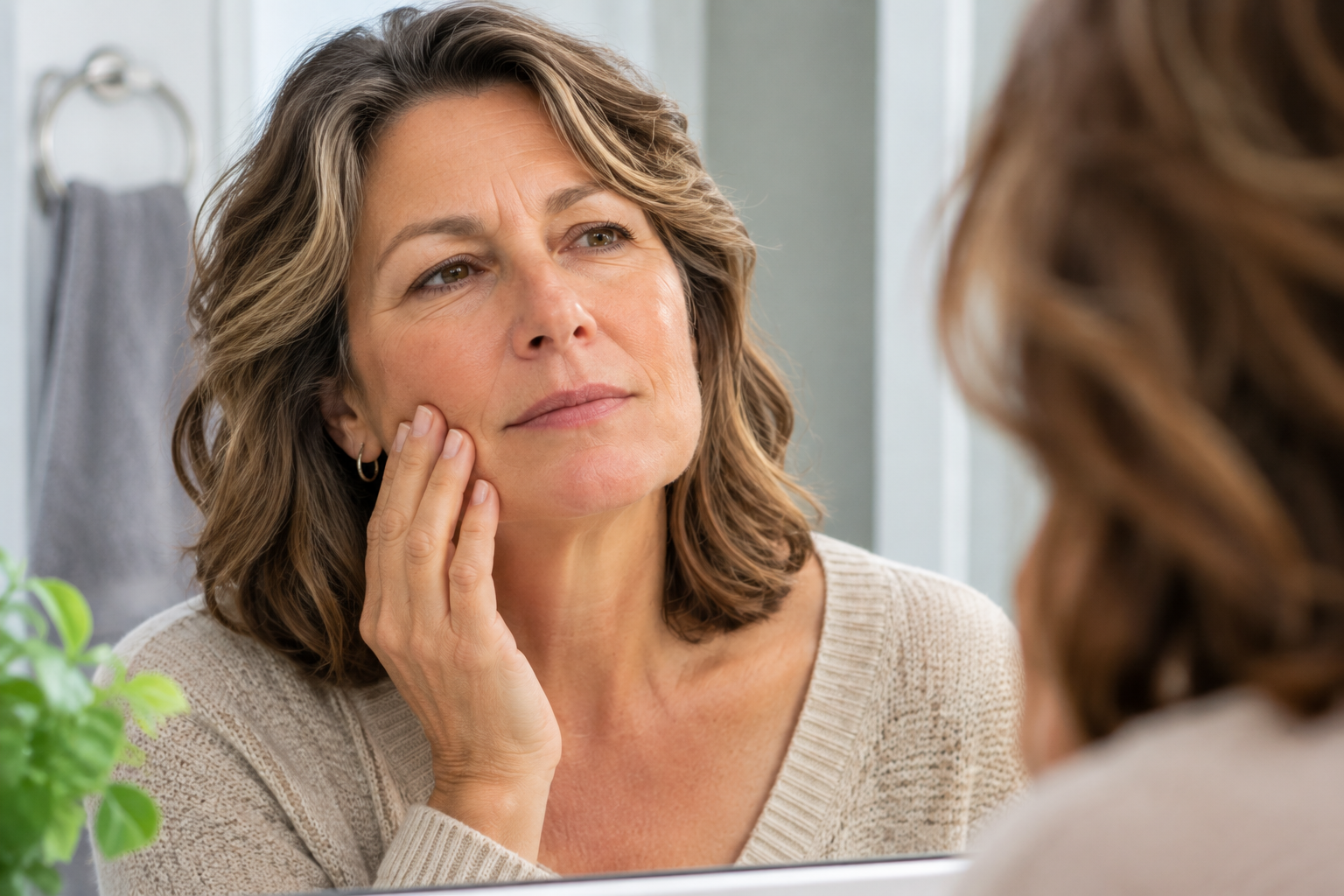
Have you ever looked in the mirror and noticed something different about your face? Maybe your cheeks look puffier than usual, your skin has become unusually dry, or you have noticed redness that comes and goes.If you're living with Sjogren's disease, you might wonder: Is this related to Sjogren's, a medication I'm taking, or something else?Although Sjogren's is often associated with dry eyes and dry mouth, it is a systemic autoimmune disease that can affect the salivary glands, skin, and nervous system. But medications, hormonal changes, and unrelated conditions can affect your face too. A new facial change does not automatically mean Sjogren's is progressing.
Facial Changes at a Glance
|
What you notice |
Possible explanations |
|
Swelling near the ears or jaw |
Salivary gland enlargement, blockage, infection |
|
Rounder, fuller face |
Prednisone, fluid retention, other causes |
|
Redness or flushing |
Rosacea, menopause, medications, heat |
|
Dry, flaky skin |
Dryness, eczema, weather, hormonal changes |
|
Numbness or tingling |
Trigeminal nerve involvement, dental or other neurological causes |
|
Acne-like bumps |
Steroids, rosacea, hormonal changes |
|
Red or purple lesions |
Vasculitis or another skin condition |
|
Sweating changes |
Medications, autonomic dysfunction, menopause, other causes |
This comparison is a starting point for questions, not a way to diagnose a facial change.
1. Facial Swelling: When Sjogren’s Affects Your Salivary Glands
The parotid glands sit near your ears and cheeks; the submandibular glands sit beneath your jaw. Sjogren’s can cause these glands to become enlarged. Your cheeks may look fuller, your jawline may appear different, or swelling may be more noticeable on one side. It may be tender or painless, intermittent or persistent.
Why might swelling get worse when you eat?
Saliva production increases around meals. If a duct is narrowed or blocked, saliva may build up behind the obstruction and cause pain or swelling during eating. Stones and other obstructions can occur with or without Sjogren’s. Mention this meal-related pattern to your clinician; it may help guide evaluation.
Can it change the shape of your face?
Enlarged glands can change the visible contour of the cheeks or jaw, but this does not necessarily mean the bones or underlying facial structure have changed. New, firm, one-sided, persistent, or progressively enlarging gland swelling should be evaluated rather than assumed to be routine Sjogren’s inflammation.
2. Prednisone and Facial Puffiness: Disease or Medication?
Prednisone is a corticosteroid sometimes used for inflammatory complications or another health condition. It can cause a rounder, fuller-looking face, often called “moon face,” through changes in fat distribution and fluid balance. This tends to look more generalized than swelling localized around the salivary glands, although appearance alone cannot establish the cause.
Prednisone may also contribute to acne-like eruptions, skin thinning, easy bruising, and slower healing. Dose, duration, and the timing of the change matter. Discuss concerns with the prescriber; do not stop prednisone abruptly or change your dose without medical guidance.
3. Dry Facial Skin and the Question of Aging
Dry skin (xerosis) can occur in Sjogren’s. Facial skin may feel tight, rough, itchy, flaky, or more sensitive to products. But weather, indoor heating, eczema, menopause, aging, medications, and skincare products are also common causes.
Can Sjogren’s make your face look older?
Dry or irritated skin can make fine lines look more noticeable. That is not the same as evidence that Sjogren’s universally accelerates facial aging. Avoid assuming that a change in skin texture or appearance proves that the autoimmune disease is becoming more active.
4. Facial Flushing: Why Does My Face Suddenly Turn Red?
Flushing is temporary redness, sometimes with warmth or burning. Heat, stress, menopause, rosacea, alcohol, foods, and medications are possible contributors. Sjogren’s can sometimes involve autonomic nervous system dysfunction, which affects involuntary functions including sweating and temperature regulation. However, flushing by itself does not establish Sjogren’s-related autonomic neuropathy.
Notice whether redness follows meals, heat exposure, a medication dose, or another trigger. A photograph and a record of accompanying symptoms can be useful.
5. Rosacea, Butterfly Rashes, and Vasculitis Are Different
Rosacea
Rosacea commonly affects the central face and can cause persistent redness, flushing, visible blood vessels, burning, and acne-like bumps. It can also affect the eyes. Someone with Sjogren’s may have rosacea as a separate condition; it should not automatically be attributed to Sjogren’s.
Butterfly-shaped rashes
Redness across the cheeks and bridge of the nose can have several explanations. A malar rash is associated with lupus, which can coexist with Sjogren’s, but a butterfly-shaped appearance alone does not diagnose lupus. Rosacea and other conditions can look similar.
Vasculitis and annular erythema
Sjogren’s can sometimes involve inflammation of small blood vessels in the skin, producing red-purple spots or purpura. Cutaneous vasculitis more often involves the legs than the face; ordinary facial flushing is not the same as vasculitis. Less commonly, annular erythema may produce ring-shaped or curved red lesions, including on the face. Persistent or unusual rashes may warrant dermatology evaluation.
6. Facial Pain, Tingling, Burning, or Numbness
Not every facial manifestation is visible. Sjogren’s can affect peripheral nerves, including the trigeminal nerve, which carries sensation from much of the face. Trigeminal neuropathy can cause numbness, tingling, altered sensation, or pain. Trigeminal neuralgia is a distinct pain syndrome often involving sudden electric-shock-like episodes.
Dental disease, sinus conditions, migraine, and other neurological problems can also cause facial symptoms. New or persistent numbness deserves evaluation. Sudden facial drooping or weakness, especially with speech changes or arm weakness, requires emergency assessment for possible stroke.
7. Facial Sweating and Temperature Regulation
Autonomic involvement in Sjogren’s can sometimes affect sweating, and patients may report reduced sweating, excessive sweating, or heat intolerance. But these symptoms are not specific to Sjogren’s. Menopause, thyroid conditions, medications, and other causes must also be considered. If sweating changes occur with dizziness, unusual heart-rate responses, or other symptoms, describe the full pattern to your clinician.
8. Changes Around the Eyes
Dry eye disease may make the eyes appear red or irritated. Blepharitis and meibomian gland dysfunction can coexist and may cause inflamed eyelid margins, crusting, and discomfort. Allergies, eczema, rosacea, infection, and cosmetics are other possibilities. Eye pain, significant light sensitivity, or new vision changes need prompt professional assessment.
9. Changes Around the Lips and Mouth
Reduced saliva can contribute to dry or cracked lips and oral discomfort. Painful splitting at the mouth corners, called angular cheilitis, may involve infection, local irritation, or nutritional factors. Oral yeast infections and changes in mouth tissues can also occur. Because treatment depends on the cause, ask a dentist or clinician to evaluate persistent symptoms.
10. Dental Changes That May Affect Appearance
Saliva protects teeth by helping clear food, buffer acids, and maintain the oral environment. With reduced saliva, the risk of cavities and dental complications increases. Severe dental damage or tooth loss can eventually affect oral function and facial appearance, but this is an indirect consequence—not evidence that Sjogren’s directly reshapes facial bones.
Preventive dental care and an individualized dry-mouth plan matter. A dental professional may discuss prescription fluoride, regular checkups, and other protective strategies based on your needs.
11. Can Sjogren’s Cause Acne?
Acne is not a defining Sjogren’s manifestation. Prednisone can produce acne-like eruptions, while rosacea, hormones, medications, and skin products can cause similar-looking bumps. The timing and appearance of a breakout can help a dermatologist distinguish among causes.
12. Can Your Face Change Even When Sjogren’s Seems Stable?
Yes. A new facial change does not automatically mean autoimmune activity has increased. Prednisone, rosacea, menopause, weather, or an unrelated condition may be involved. Conversely, someone whose overall symptoms seem stable can still develop a salivary gland problem or new neurological symptom that deserves assessment. Do not assume every change is Sjogren’s—or dismiss it simply because other symptoms are stable.
13. How to Talk to Your Doctor About Facial Changes
Instead of only saying “my face looks different,” try to describe the change and its pattern:
- What changed—swelling, redness, dryness, pain, numbness, or facial shape?
- Where is it—near the ears, under the jaw, across the cheeks, around the eyes or mouth?
- Did it appear suddenly or gradually, and does it come and go?
- Does swelling get worse with meals? Does flushing follow heat or medications?
- Have you started or changed prednisone, other medicines, or skincare products?
- Are fever, tenderness, dental symptoms, vision changes, or neurological symptoms present?
Photographs can help when symptoms are intermittent. The goal is not self-diagnosis; it is giving your healthcare team clearer information.
14. When Should Facial Changes Be Evaluated?
Arrange medical evaluation for new or persistent salivary gland swelling, especially if firm, one-sided, or growing; painful swelling with fever or redness; persistent facial numbness; or an unusual or worsening rash. People with Sjogren’s have an increased relative risk of lymphoma, but most do not develop it, and most gland swelling is not lymphoma. Persistent enlargement still deserves assessment.
Sudden facial weakness, difficulty speaking, or other stroke-like symptoms require emergency care. Sudden lip, tongue, or throat swelling with breathing or swallowing difficulty also requires emergency care.
Final Thoughts: Your Face May Be Telling You Something, but It Doesn’t Tell the Whole Story
A swollen cheek may involve a salivary gland. A rounder face may reflect prednisone. Redness may be rosacea or flushing. Facial numbness may require neurological evaluation. Sometimes several factors contribute at once.
The key is not assuming every facial change is Sjogren’s, but also not dismissing a change because it does not fit the familiar picture of dry eyes and dry mouth. Notice patterns, document what you can, and bring your questions to your healthcare team. Understanding your symptoms is about connecting the dots—not jumping to conclusions.
— Jody, Sjogren’s with Jody
Medical Disclaimer
This article is for educational purposes only and does not replace individualized medical advice, diagnosis, or treatment. Discuss new or changing symptoms and medication concerns with your healthcare provider.